Monday, 16 November 2020

How Businesses can Take Back Control of their Outgoings

 National restrictions continue to significantly affect businesses across the country.  While non-essential retail, hospitality and leisure businesses have had to temporarily close during lockdown, those businesses which are still operating will also have been heavily affected by the pandemic.  


As such, there is an enormous pressure on businesses’ financial situation.  They may be juggling reduced income whilst navigating new income streams such as various government support measures.  Businesses might be facing unexpected expenditure on PPE and the cost of making their operations Covid secure.


It is extremely challenging to budget month to month; something which is especially true for smaller businesses, who may already be operating with limited cash flow.


More than ever, the battle to keep control of company outgoings is crucial if they are to survive in this tough climate.  A straightforward place to start in this battle is a universal cost and key expense:  energy bills.


While every business receives regular energy bills, the vast majority don’t track how – and where –they are using their gas and electricity.  


A proactive way of taking back control of this expense is by installing a smart meter, to show exactly how much energy is being used hour by hour.  It will show whether switching off appliances overnight will save a small fortune, the cost of keeping laptops and phones plugged in all the time, and even how much boiling a kettle costs.


Another key benefit of smart meters is that businesses get billed for the exact energy they use.  Unless very regular meter updates are provided, bills generated without the input of smart meters are estimated, based on the usage from a previous period. If businesses have temporarily closed or furloughed some of their teams, this could be hugely damaging as they would be paying for energy they haven’t used yet, and might not use for several weeks, potentially making a big dent in their already fragile cash flow. 


A smart meter is a positive step in taking control of business outgoings and if your firm has 10 employees or less, your business could be eligible.


To see whether smart metering can work for your business, and to find out if you are entitled to claim a free one, contact your energy supplier.  It could be one of the best calls you make this week.

Thursday, 30 January 2020

Are Bad Accounting Habits Holding Your Business Back? by MATS Consulting


Picture
“Winning is a habit.  Unfortunately, so is losing.” – Vince Lomdard

In a world that is moving so fast, habits that were once good can soon become outdated and this is very apparent in finance and accounting.  A business is a living, breathing thing, and it has to constantly adapt to new technology and new legislation.
 
Companies will spend thousands on changing and improving the habits that seem most obvious, such as sales and marketing strategies, getting the latest software; anything that keeps them at the cutting edge so they can attract new business and retain customers.
 
Unfortunately this is not the case for the finance and accounts departments.
Like so many of the hidden ‘back office’ non profit making departments, finance and accounting gets the raw end of the deal and is almost a forgotten world.  With a lack of funding and resources some finance and accounting departments are forced to rely on the old habits such as using outdated systems, duplicating work and going through repetitive manual tasks.
 
It is not always the company that is to blame, this can be the world of the finance manager who clings to the old habits no matter how much extra work is created, simply because this is how things have always been done; this is where they feel comfortable.
 
In order for a business to grow, you need all parts to be working at the same level; it’s no good one part moving forward if another is static because one will always be dependent on the other and vice versa.
 
There is a brilliant book called ‘The Power of Habit, why we do what we do and how to change’ by Charles Duhigg which gives numerous examples where sticking to the old habits can have terrible results, in some cases resulting in fatalities.  The most successful companies are those who change their bad habits.
 
The book also shows that you do not have to make massive changes; ‘small wins’ can have a ripple effect, which can change the whole dynamic and culture of a company.
 
When Paul O’Neill was appointed as the new CEO of the Aluminium Company of America (Alcoa) in 1987, he announced to a gathering of every major investor that he “wanted to talk about worker safety.” This took everyone by surprise because they were expecting the usual ‘new CEO’ speech; he did not mention profit or taxes, just worker safety.
 
Finance and accounting is a secret weapon that very few companies use to their benefit.  This department gives you the most important information a company needs in order to exist, its accounts.  The numbers not only show you how well the company is performing, but it can highlight areas to save costs, which projects are actually worth doing, and much more.
 
The ‘Finance Health Checks’ that I offer highlight ways in which finance and accounting can be improved, and every time the changes filter through to other departments benefiting the business as a whole.  Most of the time it is about changing small habits, working smarter not harder, and best of all the financial cost of these changes is minimal if anything.
 
So what are you waiting for?
 
Ref: The Power of Habit, Why we do what we do and how to change – Charles Duhigg

Tuesday, 17 December 2019

Rebels with a Cause - How to Respond to Employees Joining Climate Change Protests

It is estimated by organisers that over 300,000 people took part in climate change protests in the UK during 2019, and more events are likely to take place in 2020.
Whilst some events passed largely peacefully, the Extinction Rebellion UK-wide protests in October 2019 proved more controversial and resulted in over 1,500 arrests.
Whilst many employers may feel some sympathy with the cause, the disruption caused by the protests, and the loss of workers who want to support the events can be challenging to deal with; and if those workers are arrested, further concerns arise. Regardless of their views, employers will want to know how to deal with workers who seek to participate in action on climate change.
Are Workers Entitled to Protest Climate Change?
Employers should be aware that individual workers have no right to strike in order to join a climate change protest. Trade Unions can, subject to certain strict procedural requirements, organise industrial action in which workers have some protection, but such action must relate to a trade dispute between the employees and their employer. Therefore climate change 'strikes' raising awareness of the global climate crisis are unlikely to be eligible for protection.
Workers wishing to participate in such action should therefore book holiday, or seek to rearrange their working hours, in order to attend protest events; but employers will not have to grant such requests if it would negatively impact on the business.
Can Employers Take Disciplinary Action?
Some employers may recognise the benefits of engaging with the issue and marking themselves out as an environmentally conscious company, and may want to try to support the campaign by arranging cover and offering or agreeing to unpaid (or even paid) leave for workers who want to protest. Alternatively, if this would cause operational difficulties, a business may be able to find other ways to support the cause, for instance by hosting a lunchtime event or arranging an appropriate fundraising or awareness-raising activity. But ultimately, if an employee misses work in order to attend an event without permission, then an employer would be justified in taking disciplinary action against that employee for unauthorised absence.
Are There Reputational Risks?
Employers should consider whether they have (or should adopt) a policy which provides that employees should not engage in activity that would damage the employer's reputation. An employee's arrest for conduct outside work will not in itself necessarily justify disciplinary action. However, if a policy is in place, and it is reasonable to conclude that the employee's actions have been detrimental to the employer's reputation, such action would be justified.
Whether participation in any protest, or forming part of a mass arrest, could reasonably be said to be detrimental to a company's reputation may well depend upon the company's ethos and customer base. A misevaluation of this could itself give rise to reputational damage.
If the arrest leads on to charge and conviction, unless a prison sentence were imposed which might justify a dismissal on the basis that the employee could no longer fulfil their contractual duties, the employer will have to consider whether the offence for which the employee is convicted is one which reasonably justifies disciplinary action. Where conduct occurs outside of work, this can be difficult to justify.
What You Should Do Now
Ultimately it will be for each employer to determine the approach it wants to take, but with more action likely, it is worth considering this as we enter the New Year and it may well be prudent for employers to clarify their position to employees in advance of further protests by sending out internal communications and reminding staff of the implications of taking part in these events.
If disciplinary action does become necessary, employers must be careful to follow a fair process, which complies with the ACAS code of practice on disciplinary and grievance procedures, in order to avoid a potential tribunal claim.
For more information please contact Michael Delaney in our Employment Lawteam on 01923 919 316 or mdelaney@vwv.co.uk.

Nuffield Health Community Project 2020

Nuffield Health is a not for profit charity dedicated to increasing everyone’s knowledge in relation to their own personal health as well as supporting in their fitness and wellbeing journey.
Within this project we’re donating 1000 complimentary health checksinto the local community this year focusing on employees’ health and wellbeing. We will be appearing at various local events & festivals alongside corporate functions.
The great thing about this journey with our corporate partners is this also ticks the box for their employee’s wellbeing and benefits calendar through the year. Any business can have up to 4 of these events per year completely free.
Events include physical & emotional wellbeing via a health professional / physio who can deliver individual 1-to-1 support or group presentations. We supply booking sheets for these so they don’t effect the day to day business routine. All results and information sheets will be given on the spot.
The NHS recommends a minimum of 150 minutes moderate exercise per week so to help support you our events will include a complimentary 7 day family pass for your team.
We can also support charitable events such as office challenges or healthy month campaigns. All events are completely bespoke to each business to suit your needs.
Therefore, please get in touch with any your team wellbeing activity ideas you may have for your company and we can support you with this where we can.
For any more information, please contact james.chandler@nuffieldhealth.com

Nuffield Health BuiltAroundYou.

Exercise has been proven as a natural relief to several medical conditions both physical & emotional. We have heated swimming pools and on site physiotherapists to help with the journey.
Some of the conditions exercise has been proven to help are:
Rehabilitation, ADHD, Stress, Depression, Anxiety.

Tuesday, 26 November 2019

My lease is due to expire soon. Can I initiate a renewal or do I have to wait for my landlord to initiate?


A tenant has the right to serve notice on his landlord up to 12 months ahead of the lease expiry date.  The Section 26 Notice, which would be served by your solicitor, would request the granting of a new lease.
In the current economic climate when rents in certain sectors are beginning to fall rather than rise it may be in the tenant’s interest to serve notice at the earliest opportunity so that the agreed new rent, which is likely to be at a lower rent, will commence on the expiry date of the existing lease, rather than waiting for the landlord to serve notice on you. It is in the landlord’s interest in these difficult times to do nothing and hope that tenants forget to initiate proceedings themselves. Conversely, if market rents were increasing it would be in the tenant’s interest to delay for as long as possible. An interim rent can also be applied for so that a lower rent could be paid almost immediately, even though the lease renewal has not been settled. You can apply to the Court to determine this interim rent at any time within 3 months of an Interim Rent Notice, although this cannot start before the end of the lease.
If you or your advisers do not take the initiative in serving notice your landlord is not obliged to take any action and you will be deemed to be ‘holding over’ on the existing lease terms and at the existing rent which could well be more than the current market rate.
Open market rents for retail and office properties in some locations have shown a fall over the last three months and a good surveyor such as Aitchison Raffety, with experts in all of these types of buildings should be able to find enough comparable evidence to support your claim for a lower rent.

My lease is coming to an end and my landlord wants it back for his own use – what can I do and what rights do I have.
If your lease is protected by the Landlord & Tenant Act 1954, then the landlord has a right to ask you to leave the premises under certain circumstances, but you have the right to compensation as set out in the Landlord & Tenant Act 1927. The amount is limited to a multiple of the rateable value depending upon how long your business has been in the property. The landlord may state that they want to use the property themselves but can only do so if they have owned the property for more than 7 years. If they have not then they cannot force you to leave the property unless of course you have not been paying the rent on time. They may also state they are redeveloping. However they must show a clear intention to redevelop, which would include having a valid planning consent and also showing that they have the financial means to carry out a development.
If you have been in occupation for 14 years or less then the compensation is 1 times the rateable value. Over 14 years then the compensation is 2 times the rateable value. However for expert advice contact Ian Archer at Aitchison Raffety on 01727 843232.

Monday, 14 October 2019

A Message From Inventor Tom


A Message From Inventor Tom

'I LOVE SOLVING PROBLEMS AND MAKING LIFE BETTER.'

With Lord Sugar I’ve been so fortunate to launch my STYLFILE ergonomic nail files, a safety spy hole baby nail clipper and most recently STYLPRO makeup brush cleaner and dryer. Something I keep being asked for is teeth whitening that works. We’d all love Whiter teeth, teeth that really make you want to smile right? 
THE IDEA
After a lot of thought and research into the problem. I wondered, what if we put blue light technology into the bristles of a toothbrush and added a small amount of whitening ingredient into a toothpaste to whitening every day as part of daily routine. For the last two years I’ve been obsessed with turning this idea into reality.
'YOU HAVE TO BRUSH YOUR TEETH EVERY DAY ANYWAY, SO WHY NOT!?'
 TEETH WHITENING
Teeth whitening happens when stains are removed from the tooth ‘enamel’, or when the colour of the layer underneath the tooth enamel called ‘dentin’ is changed. Using sonic vibrations and PAPtech in the toothpaste, STYLSMILE, my latest invention, aims to do both 
 WHAT IS STYLSMILE?
The STYLSMILE is by far the most complex project I’ve ever worked on. 
Finding a way to make a sonic toothbrush, with blue lights was very tricky, with the added problem of ensuring only the brush head vibrates not the handle and stopping water or toothpaste getting inside the handle.
The next problem was getting an effective whitening agent into a toothpaste that could be used every day and twice a week in a whitening booster tray. Whitening agents are problematic as they love mucking up other ingredients. There are also restrictions on some whitening ingredients.
 'MY LAB IS FILLED WITH TUBES OF FAILED TOOTHPASTE'
 It's been such a huge task there is no wonder I believe it’s the first time it’s ever been done! It’s been a long project, but I’m so proud of the results. I tell you, brushing your teeth with this tooth brush is so cool, especially at the mirror in low light.
It's very important to note, the blue lights you see are NOT UV light. STYLSMILE uses blue light technology, this blue light is sometimes called cold light. Blue light is known as a great way to accelerate or energise whitening in the dental industry.
The STYLSMILE toothpaste contains ‘phthalimido-peroxy-hexanoic acid’ or PAP. A non-toxic, peroxide free whitening agent which also has anti-plaque and long lasting bacteria benefits.
The STYLSMILE toothpaste, tastes just like regular toothpaste and contains everything recommended you for healthy and clean teeth. It can be used as your daily toothpaste AND also with the accelerator tray meaning you only have 1 tube to worry about.
For best whitening results, we’ve also included a blue light accelerator tray which can be used for 15 mins twice per week. Personally I use it in the evening, after brushing my teeth, whilst I'm getting ready for bed.

WHITENING THAT WORKS 

In an Independent consumer trial of 50 people, 88% almost 9 in 10, said they had whiter teeth after 4 weeks using the STYLSMILE. On average their teeth where 3 shades whiter and 1/4 of the user's teeth were 5 shades or more whiter! 
The STYLSMILE achieves such amazing results but it’s important to note STYLSMILE only works on natural teeth, not veneers or false teeth.

100% MONEY BACK GUARANTEE

Lord Sugar and I believe so much in STYLSMILE we are offering a 100% money back guarantee should you not be satisfied. Terms apply.
I really hope you are excited to try my latest invention and first steps into the dental industry. I'd love to see your STYLSMILE journey, so please make sure you tag us @stylsmile_uk in any videos and photos on social media. Me and my team would love to see your results!

Tom 

Wednesday, 9 October 2019

A Cluttered Space = A Cluttered Mind


My name is Tracy Ross and I am a Professional Organiser. I set up Blissfully Organised eight years ago to support my clients to simplify their home management and make better use of the space that they have.

I am often asked how clutter affects our brains and the positive benefits of decluttering. I wanted to share with you my thoughts. I hope that you find it useful.
  

Where do we learn our organisation skills?
The way we organise the space in our homes is individual to each person, but a well organised home will save you time, save you money and reduce stress levels. Often when I am with a client they will say oh I got that from my Mum. We may adopt the same organisational traits as our parents or sometimes we rebel against those and do things differently.  For example, if you grow up in a busy home you might prefer to create a calmer environment in your own home. Alternatively, if your parents were very organised and didn’t hold onto items (maybe they disposed of a favourite toy when you were little) you may now feel a stronger sentimental attachment to the things that you own.

Why do we hold onto things?
Since I started Blissfully Organised 7 years ago I have found that there are some key reasons why people hold onto the things that they have.
1.       I might need it one day
2.       Strong sentimental attachment to items that they have inherited or been offered as a gift from special family/friends
3.       It was expensive. You may have treated yourself to an expensive pair of shoes or jacket that you no longer wear but want to hold onto
4.       Books/crafting materials I will read it or make it one day

Why is it difficult to let things go?
The more that you are emotionally attached or financially committed to an item the more you feel that you need to keep it.  We attach a value to each new item coming into our home making it harder for you to give them up.
Does Clutter Really Affect Your Mind?
Clutter can play a significant role in how we feel about our homes workplaces and ourselves.  Messy homes or workspaces can leave us feeling anxious and overwhelmed. Each person’s perception of clutter is unique to them. All my clients have different things in their home that are important to them and need to be managed. I work with them to create easy home management systems that will reduce clutter. Your home should be a place where you can relax away from the chaos of day to day life. If clutter can build up it will have an impact on your mind.
Physical Clutter
Visible clutter or chaotic storage cupboards in your home or work environment bombards your mind with excessive messages and creates chaotic signals. It can affect you in one or more of the following ways:
1.       Clutter distracts us by drawing our attention away from where our focus should be
2.       Clutter makes it more difficult to relax, both physically and mentally
3.       Clutter creates visual reminders of everything that needs to be done
4.       Clutter creates feelings of guilt (I should be more organised) and embarrassment (I don’t want people to see the chaos in my home)
5.       Clutter frustrates us by preventing us from locating what we need quickly e.g. paperwork, car keys etc.
6.       Managing clutter takes more time (i.e. looking for misplaced items or preparing for guests to arrive) and costs more (the cost of replacing items and purchasing duplicate can add up, incurring late fees or not getting the best rate on your utilities or investments)

Digital Clutter
Clutter isn’t just physical clutter. Digital clutter has the same impact on your mind as physical clutter i.e. managing the files on your computer, managing your digital photos on various gadgets, responding to and managing emails, social media alerts, App updates etc. Anything that beeps for your attention will impact your ability to focus and perform tasks.


How can reduce the Clutter in My Home?

1.         Start with one area at a time and finish decluttering that area before moving onto the nest space. This will give you a sense of achievement. I am always there to support you if you need non-judgemental support with any specific area
2.       Create designated spaces for frequently used items and supplies. So that you can quickly and easily find what you need when you need it.
3.       If you don’t use it, don’t want it or don’t need it get rid of it. You can recycle or donate items that are still usable.
4.       The items that you use less frequently should be stored in less accessible places i.e. loft, garage, utility room. When you put things in the garage/loft add a date and keep an electronic list. If you have not accessed, it within a year you probably don’t need it.
5.       When you take something out of its designated storage space put it back when you have finished using it. It takes practice to begin with but if you have a designated space for everything that you need it is much easier.
6.       Be aware of what you and other people bring into your home. Don’t let papers pile up. Think about the journey of all papers entering your home/workspace. You need to create an arrival space for all incoming papers. I usually recommend a shallow in-tray. Then spend 15 minutes each day sorting through what needs to be actioned, items to recycle and those can that be filed away. Get into the habit of immediately recycling papers that you don’t need right now. If you want to find out the information you can do this very easily.  i.e. flyers, menus newspapers etc
7.       Mental clutter -focus on one project at a time without distractions of mobile social media etc


I offer a confidential and non-judgemental service to support my clients to declutter and organise their homes. I provide the emotional support, practical help and motivation to help you achieve your goals, step-by-step. To find out how I can help you tame the chaos and set up easy to manage systems to maintain a clutter free environment please contact me at tracy@blissfullyorganised.co.uk.
Tracy Ross
Professional Organiser
Blissfully Organised
www.blissfullyorganised.co.uk

Thursday, 1 August 2019

Ten changes to make at £1 million turnover

As your business gets bigger, you may need to make some changes to stay ahead of the pack.
Reaching £1 million turnover is an important milestone for any business, but it should also be a time to review and refresh. You started your company because you saw a gap in the market and had the vision and energy to attack it. Yet, as time goes by, it is easy to become so busy with the day-to-day running of the business that issues for the future go unaddressed. So what potential changes do you need to consider as you plan for the next million?
Here are ten ideas.
1) Performance - Measure and improve. For example, not managing cashflow can lead to failures of even profitable businesses. As the saying goes: “Sales are for vanity, profits for sanity and cash is for reality.” Do you have enough cash to keep growing your business and what does your capital structure look like going forward?
2) Protection - Shareholder protection and agreements, key person and directors and officers’ cover may have been neglected in the launch excitement, but should not be further delayed. “The challenge in doing this later is that businesses get more complex and emotion based when bigger sums of money are involved as they get larger. This can affect mindsets, so it is key to get these vital insurances set up now,” says Martin Brown, chief executive of business growth advisers Elephants Child.
3) Plan for the next milestones - Businesses can hit glass ceilings or brick walls at levels of turnover of say £1 million, £5million, £10 million and £20 million. This is a good time to think about how to grow the business valuably to provide future exit options and what barriers are likely to be encountered along the way. Assess your leadership, people, processes and technology and work on the business.
4) Purpose - Simply making money is no longer a sufficient aim, businesses must have a sense of purpose to appeal to staff, customers, suppliers and external stakeholders. Spend time devising your company’s values, vision and what you stand for. What is it that you are really trying to achieve? What does your business do differently? How is it sustainable over the long-term?
5) Possibilities - You started a business because you saw an opportunity, but do you have the business knowledge to understand what is the art of possible? “You need to know where you can take your business,” says Martin. “How much can you grow it? Do you need to raise funds to do so? How are you going to build value in the business and then realise it?”
6) Product or service life cycle - Are you refreshing your original business concept and strategy to ensure they are still relevant and sufficient for today’s fast-changing world? Can you avoid a “Kodak moment” by making sure you foresee industry changes and constantly refine and improve?
7) People - Ensure that you are recruiting the right talent and providing them with the training and mentoring they need to move the business on. “As you grow your business, you’re going to need to achieve results through other people,” says Martin. “If you don’t carry forward the business culture or delegate or plan well, the person who started the business can actually become its biggest constraint.”
8) Partners - Do you have the best advisers to challenge you and the business going forward? Just because they got you to £1 million turnover does not mean they are the best people to take you to the next milestone. Are their skills still relevant? If not, do you need somebody else? 
9) Portfolio - Are you proactively managing the types of customers or clients that you are attracting? Are they still delivering value and profits for your business? Over the years, companies can collect suppliers and clients, but your business may need to not only grow existing clients and acquire new ones but also disengage from those that are no longer a good fit. 
10) Passion - Do you still love the business you began? Is it your passion? If not, should you be doing something else?

Where the opinions of third parties are offered, these may not necessarily reflect those of St. James’s Place.

Tuesday, 23 July 2019

How can a health and wellbeing strategy help you?
Whilst many employers are aware of the benefits of promoting health and wellbeing, it's often carried out on an ad-hoc basis. The difficulty with this approach is that it makes efficacy evaluation difficult, creating challenges when it comes to getting buy-in from those in control of the budget, and it can also lead to spiralling costs.
Health and wellbeing strategies are also often underpinned by a specific focus, for example reducing absenteeism. However, one of the key challenges is to go beyond this core objective and take a more holistic approach to employee health and wellbeing.
Below we outline some of the topics that a strategic approach to employee health and wellbeing can start to address:
Mental Health
Why do workplaces need mental health first aiders? Our research shows that 86% of UK employees believe their organisations are not doing enough to help them deal with work-related mental health issues. Mental ill health is the single largest cause of disability in the UK and 12.5 million working days are lost each year due to mental health issues. Read more.
Stress
Building resilience is one way to successfully manage stress. It gives us the ability to persevere and continue to function at a high level in times of adversity, despite failures, setbacks and loss. Here we take a look at 10 steps towards building resilience to cope with stress in the workplace and avoid burnout. Read more.
Sedentary Behaviour
British people sit for an average of 8.9 hours a day. Office workers are spending the majority of these hours sat at their desks, and research indicates that this poses a real health risk, irrespective of how active people are outside of work. This is why it’s vital to reduce sedentary behaviour and be more active in the workplace. Read more.
If you need any further information about our health and wellbeing offer for Chamber members please get in touch or visit our website.

Monday, 15 July 2019

COBCOE Connects becomes Connects


TIAO Team is pleased to announce that, following the recently announced merger of COBCOE chambers with the British Chambers of Commerce, COBCOE Connects will change its name to “Connects” and formally hand over the support of chambers on the platform to TIAO on the 5th of July 2019.

This change enables us to bring together all the communities on the platform and make it easier for every member company to be visibly part of a wider global platform.

British chambers of commerce will appear under the new “UKGlobal” community.

We remain committed as ever to growing the platform – now 27 chambers and more than 11.000 members – to become the new global standard for business connectivity, repositioning chambers of commerce as the gateway to business success in the 21stcentury.

To ensure continuity in terms of expertise and capacity to support former COBCOE and other British Chambers on the platform TIAO has signed a memorandum of understanding (MOU) with Daniel Shillito[1], immediate Past President of the British Chamber of Commerce in Italy and former COBCOE Board Member, who will partner with TIAO in servicing Connects chambers, the UKGlobal community and their moderators on the platform, as well as in the recruitment of additional chambers. TIAO’s Karolina VainilkaitÄ— will remain the first point of contact for all chamber moderators.

We believe the announced changes will serve to further strengthen Connects and its UKGlobal community platform and we look forward to continuing to work together with BCC and all former COBCOE chambers to connect British chambers and their members around the world.


—-

[1] Daniel Shillito will partner with TIAO as a separate commercial entity, not as the British Chamber of Commerce in Italy or in his former capacity as its President.

Monday, 10 June 2019

How to be more assertive at work, by Sarah Jones, Sarah-J Coaching

Do you ever worry that you’re not being taken seriously at work? If you doubt yourself, then this can come across in the way you speak and present yourself. The key to being heard and taken seriously is assertiveness.

What is assertiveness?

Assertiveness is the ability to express yourself confidently, with respect and consideration for others in the conversation. Assertiveness takes confidence, tact, and thoughtfulness.
In an attempt to avoid being passive, people often mistake assertiveness with aggression, but this is not what being assertive is about. Being the loudest person in the room does not make you the most assertive. Assertive individuals know how to get the point across without being intimidating or dismissive.

How to be more assertive

At a very young age I found myself as one of the only women on a board for one of the world’s largest logistics mergers. This was pretty intimidating and it would have been so easy to convince myself that I wasn’t qualified to be there. But I was qualified, and I needed to show that.
I had to learn quickly how to maintain my assertiveness in this situation. I developed the following ideas in response and they have helped me countless times since.

Come prepared

The best way to speak with authority on a topic is to make yourself an authority. Learning and preparing as much as you can will help you speak and act with assertiveness.
Admittedly, this isn’t a quick-fix. It takes work. This may involve preparing for a big meeting with notes for every possibly contingency, or generally learning as much as you can about your industry. Identify the gaps in your knowledge, the areas where you feel uncomfortable or less confident, and build upon those areas.

Don’t rush in

If someone asks you a question or comes to you for your opinion, it can be easy to panic and rush in with an answer, any answer. It is better to take a deep breath and really consider what you’re going to say before you say it.
Taking your time and being thoughtful with your responses won’t make you appear unsure or timid. Just the opposite really; it conveys confidence and poise. If you don’t have an answer at the moment, be honest and explain how you plan to find an answer. Honesty and authenticity will garner you a lot more respect than ultra-quick answers.

Listen

Being assertive is not just about what you say and how you say it. In order to respect others in the conversation, it is important to listen to them and understand their opinions. Incorporating other’s information and points of view into your responses makes a great impression on your peers. Assertive individuals will listen without interrupting others or responding in a rude manner, even if you disagree with them.

Conclusion

Being assertive involves being confident, thoughtful, tactful, and prepared. Boost your assertiveness by doing your research, taking your time with your responses to others, and by being an active listener.
Could you be more assertive at work? I provide coaching tailored specifically toward assertiveness and confidence in the workplace. Get in touch if you are interested

What it really takes to succeed, by Sarah Jones, Sarah-J Coaching

In this day and age, with celebrity news, YouTube adverts, Instagram images… it’s easy to think that success often happens ‘overnight’. However sometimes ‘overnight’ has meant several years of hard work, and what we see is the end result.
Especially if you are reaching for a different way of life, or goal – rather than just the next step forward. This is where breaking down goals into manageable chunks is important because you can take a step-wise approach, rather than facing a huge mountain of a goal!
So back to ‘overnight success’ let’s look at some famous successful people, and what it took them to succeed:
  • Sly Stallone was sleeping in his car and even had to sell his dog when he got his first substantial movie part. He bought the dog back by the way!
  • Seuss’ first children’s book, And to Think That I Saw it on Mulberry Street, was rejected by 27 publishers. The 28th publisher sold six million copies of the book.
  • Bill Gates dropped out of Harvard and started a business called Traf-O-Data which failed, but the rest is history.
  • Oprah Winfrey is one the richest and most successful women in the world but had many career setbacks and was fired from one TV presenting job as she was told she was unfit for TV.
  • Sidney Poitier won an Oscar and became a very respected actor but was once told to stop wasting his time in acting and go and wash dishes.
  • Harrison Ford was told by many famous executives that he didn’t have what it took to make it in films.
And these are just a few examples, and I’m sure if you look at your life to-date you can see the twists and turns that’s taken you to where you are now.
I’ll cover just a couple of traits or characteristics that successful people demonstrate:
Resilience
This means adapting to setbacks, rolling with the punches and course correcting rather than being completely put off but setbacks. In fact setbacks can be positive experiences if you choose to see them that way – great opportunities learn, reflect on what you want, and recalibrate how you get there.
Perseverance/persistence
Pay off…again in similar vein to resilience it’s about keep keeping on. Not be put off by difficult situations, or giving up because it’s hard work, or too hard. Keeping a picture of the end in mind will help. Keep going until you hit on an idea or thought that’s going to work.
Managing negative mind chatter
Our minds can go into overdrive with negative thoughts and patterns that can run riot in our minds. There are many tools and techniques where you can re-train your brain and create new neural pathways that are geared for success
Self-awareness
Many successful people are self-aware. They are aware of their strengths and weaknesses and don’t overestimate themselves. Yes confidence is important but not when it tips into arrogance. This means you can seek help where you need it, and aware where you really add value. Successful people also tend to use techniques to help develop and maintain self-awareness such as meditation, quiet time and solitude, keeping a journal and practising gratitude.
Avoiding procrastination
It takes work. By all means outsource tasks where you can, especially if it’s not your core skill set – but really no-one is going to do this for you – if you want something, you have to put the effort in. Otherwise, you’re kinda daydreaming.
So I’ve just covered a few aspects of what contributes towards success, there are many more. However, a lot of it is mindset. To find out more about anything mentioned in this blog, or the techniques visit my coaching programmes page and the MindNav® programme: https://sarah-j.com/self-navigation-coaching-programmes/mindnav/
If you’d like to contact me directly, feel free to get in touch with me here.

Tuesday, 19 March 2019

Overlooked your Chambers' hidden value?

Chamber Patron NIS tell how they had been missing out on all of the benefits of being a part of Hertfordshire Chamber, read their case study below:


"Like many SME's we have had our fair share of recruitment issues, with positions vacant for over a year despite using the services of specialist agents and Linkedin.

Potential risks with staff retention remain our other challenge. In an industry plagued with global skill shortages, salary increases only focus employees over the short-term. Introducing a tangible benefits package presented the usual budgetary constraints.

NIS joined the Hertfordshire Chamber of Commerce to increase awareness of our brand and gain a better understanding of the challenges for local business. However, we had completely overlooked the wide ranging benefits which came with our membership. We were also surprised at the competitive cost of providing a comprehensive AXA health scheme after applying the Chamber membership discounts. For example, a 20 year old can join the scheme for about £10 per month, someone aged 60 for around £25 per month, and all siblings under the age of 30 can be added with just one fee for the first child at around 50% of these values.

In addition, all employees received a 50% PureGym membership, which has worked well as a team building exercise after work. The whole of our management team were given comprehensive health check visits. Most surprisingly, a 50% discount on the renewal of our Chamber membership covered a significant proportion of our overall expenditure. We look forward to an improvement in productivity and peace of mind for our staff following any serious illness.

Ironically, I had not seen the Doctor for over 27 years but shortly after introducing the AXA scheme, I ended up with what felt like a life-threatening issue comprising of constant and agonising stomach pains with significant weight loss resulting in the reduction of my waist by about 8 inches within 2 months. It was a worrying time which prompted a review of my Will!

Sadly, the 3 month NHS Specialist waiting list was concerning, however my AXA policy kicked in extremely quickly. I was given access to a list of Specialists throughout the country, with details of their credentials and educational history. Within about 15 minutes of seeing the Professor on Christmas Eve, I was reassured my condition was not serious and would self-heal in time; after a few days the scan confirmed his diagnosis. This was quite a relief and my New Year's resolution didn't feature weight loss on this occasion!"

Mustaq Chandia, Director, Network Integrity Services Ltd.


AXA PPP Healthcare; Small Business Healthcare Cover

At AXA PPP Healthcare, our small business healthcare cover aims to get small business owners and their teams back to health and back to work as soon as possible by providing them with prompt access to eligible treatment in a private hospital.

Should Chamber of Commerce members wish to take out a healthcare cover plan with us, they will also receive:
  • 50% off their Chamber of Commerce membership for three years*
  • Free access to our 24/7 Employee Assistance Programme for all employees, regardless of whether they're covered on the plan. This gives employees' access to a trained counsellor over the phone, 24/7, 365 days a year.
  • 50% off annual PureGym membership for the whole team, not just those covered by the plan**
Find out more about our exclusive offers for Chamber of Commerce members here

*This offer is only available to members of participating Chambers
*This offer is only available to direct new customers of AXA PPP healthcare only.
*50% off Chamber membership is up to value of £125 per employee you cover each year.
*50% off Chamber membership can be claimed each year for up to three years as long as a current business healthcare plan remains in force on a direct basis.
*AXA PPP Healthcare reserves the right to change or remove this special offer at any time.

**Read the full terms and conditions here

Monday, 25 February 2019

How to start an Import Export business

Knowing how to start an import export business is challenging and takes some study and research but the rewards are great.  Here’s a few tips and ideas on what to think about as you start your venture.
Be your own boss  Be Your Own Boss
Starting an import export business or any business for that matter, is exciting and hugely rewarding. The sweat, hard work and hours that you put into your own company, benefit you directly, rather than your boss or manager, you reap the rewards. Making all the decisions and being accountable only to yourself is a freeing feeling and the rewards are many.
Securing your own financial future, earning the respect and admiration of colleagues, friends and family as someone who took the risk and went out and built their own company is a satisfying feeling. Working the hours that you want to work is a huge advantage over having to work endless hours for someone else.
Let’s get to the point and tell you how to set up your own company, how to trade on the International stage successfully and point out some of the most common pitfalls, so that you can setup and trade successfully and most importantly, profitably from day one.

Hot or Not?  Hot or Not?
You’ve thought long and hard about what you want to buy and sell and how to build and grow your company. Many are eager to jump right in and buy stock and start selling, however before you start up your business and spend your hard earned money on stock it’s vital to test the water and find out if others are as enthusiastic about your product as you.
You may THINK that the product you want to sell will be successful and you’ll make a healthy profit from it but in reality this may not be true. We’ve all seen Dragon’s Den where a budding entrepreneur thinks they have the most revolutionary idea or product but the wise Dragon’s don’t see it! Just because you like a product it does not mean that the public will like it and part with their hard earned cash to buy it.
There are many ways to find opinions on your ideas and products. Sometimes you have to be a little creative in how you approach it but its time well invested. Start with friends and family and ask for honest opinions. Discuss pricing and ask your friends if they would pay for your product. Hold a focus group in your local neighborhood, give your product to the focus group and ask for their thoughts and feedback. There are other ways that you can conduct market research too which we cover in our import export training course.
If you’re looking for some inspiration for ideas, check out or blog post “What Can I Import and Sell?“.
Find the best products  Find the Best Products for the Lowest Price
As we continue our course teaching the best practices for starting your International trading company, it’s extremely important to know where to buy your products from. This is the foundation of your business and will dictate if your business is profitable.
A common complaint we hear from many entrepreneurs is “I know what I want to import and sell but I don’t know where to get it from”. Where can you source products from with such a huge amount of suppliers in a global market place?
You must understand how to source your product from the right supplier with the right terms and price. Many traders rely on Internet suppliers like as Alibaba and other such companies. These companies a certainly worth looking at there’s no harm in this but you’re limiting your search. There is a great myth among buyers in that you get the best price, product and terms from China. This is not always the case! China is not actually the centre of global trade. Sourcing from companies in Preferential Trading Countries (PTC) can be a much easier and cheaper way to go.
Get samples  Getting Samples From Suppliers
Facing buyers will be a key part of any trading that you do and following some simple guidelines will make the process easier, give you more confidence and give you a much higher conversion rate. Buyers will want to see samples of the goods they intend to buy and samples come in all shapes and sizes.
Some are easy to obtain from supplier such as clothing, toys and watches. Others are bulky, such as construction and capital equipment. Most producers will give a limited number of samples free of charge to a serious buyer or at a nominal cost. It’s important to make sure you know how the products work when you receive these samples, as you will have to make presentations to potential buyers so familiarise yourself with all aspects of the product. This is where your market research and focus groups will come in very handy as you will be able to take all the feedback and questions you received and be ready for the same, preparing your pitch to cover these.
A range of products is better  A Range of Products Earns Bigger Profits
Now that you have sourced your product, got your samples, conducted your research which is proving positive, you may feel ready to dive in and start approaching buyers and retailers, asking them to place orders.
Before taking that jump, it’s very wise not to become complacent and make sure you are varying your product range. This offers several advantages.
Concentrating on selling just one product will limit you. You should ideally have a complimentary RANGE of products.
Appointments to buyers/retailers must result in a sale. If you show your potential buyer only one item, for example, an electric kettle and they do not want to place an order, your visit was a waste of your time. However if you then show the buyer your complementary range you have a better chance of securing an order.  If they are not interested in youe kettle, they may be interested in your unique coffee maker, toaster and waffle maker.  You get the point, remember, there’s safety in numbers!
By offering a range, even if your buyer likes the main product you wanted to market, they may also like other products within your range, so an order that would have been for just one product, could turn into an order for several products. This increases profits for you and in the worst case, if the buyer did not like the first product you had in mind, they may like another in the range and still place an order. Don’t limit yourself but keep as many options as you can on the table.
Understanding agencies  Understanding Agencies
Many businesses are set up as agencies. There are two main types of agencies available and it’s extremely important you understand both. Both have their benefits and can offer you advantages depending on your personal situation and what you want to achieve. There are traditional agents and brokers. There is a lot to understand when dealing with agencies which is a little beyond the scope of this article but our online International Trade course goes into much detail on agencies and our one-to-one support can offer help and advice as to the best route for you and your business.
Finding buyers for your products is obviously key to any import export business and our blog has an article with some suggestions on how to find buyers for your exports.
Do the deal  It’s a Done Deal
Negotiation is one of the highlights of being an entrepreneur and being “the boss”. This is where you can set the terms of your business and drive a hard bargain. Negotiating is a key part of any business from the trader at your local market stall, to multi-billion pound companies the world over.
Hone your negotiating skills, be confident and a little charming and you can walk away with the deal you want. We’ve seen on Dragons Den how the dragons and the entrepreneurs will negotiate back and forth, sometimes quite intensely until the deal is done with both sides feeling great about the agreement. As an entrepreneur this is a great feeling, securing the deal you want and giving you more confidence for the next deal.
At every junction of your International trading business, you are going to have to negotiate. Once you’ve sourced your products, you’ll have to negotiate the price, the quantities, the samples and it won’t end there. When you approach buyers, you’ll have to negotiate the terms of the sale, the retail price, the wholesale price, minimum order, delivery time, exclusivity and the list can go on. Contract terms will need to be negotiated, which will follow in the next lesson.
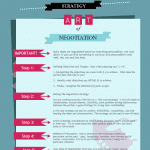
Import export negotiation techniques Buyers and Sellers seldom agree on terms and conditions of the contract on the first attempt. There are usually periods when both parties have to negotiate to reach an agreement. Before you enter into negotiations, you must develop an negotiating strategy. Here’s a few negotiation techniques to get you started.
Negotiating becomes easier the more you do it. You will start to get an idea of how far you can push and what the other party will be willing to give up. As you do more and more deals with the same parties, you will be able to negotiate better deals and likely more quickly as trust will be built. As the other party gains trust in you by paying your bills on time and living up to your word, you may be able to negotiate even better deals going forward as you remove their “hassle factor”.
Incoterms 2010  Get It Delivered with Incoterms 2010.
This is where you can really take hold of your business and show your import export knowledge. Terms of delivery is fundamental to any trading business and once you are familiar with these you will be in a much stronger position to negotiate and trade.
It’s absolutely vital that you are aware of these terms of delivery and understand them. By understanding these terms, you are protecting your goods and covering your risk. Get this right and you’re half way to building your International trading empire.
There are eleven different terms of delivery:
EXW-FCA-CPT-CIP-DAT-DAP-DDP-FAS-FOB-CFR-CIF. These are referred to as
Incoterms 2010.  Check out our blog post covering “What Are Incoterms?” for more understanding.
These terms determine the buyer and sellers obligation and using these terms will clear up any confusion and stop close any issues before any disagreement arises.
Insurance  Marine Insurance
Needless to say, insurance of your goods is a must. Without this, the money that you’ve paid for you goods, should anything go wrong, is unprotected and will hit your cash flow and profits hard. Accidents happen and it’s a risk not worth taking and something that can easily be covered with each shipment.
Marine Insurance gives cover from the sellers warehouse to the buyers warehouse, therefore it offers “Multi Modality” cover. As with all insurances there is small print and conditions that you must be aware of. Without understanding these, your shipment may not be covered, even though you have paid your premium. Taking the time to really understand insurance of your goods is vital to running a successful business.
Terms and Conditions  Those Pesky Contract Terms and Conditions
Terms and conditions of trade are possibly the most fundamental part of business. Without terms and conditions agreed upon, there will never be a contract signed or an order placed.
Understanding the terms that your business associates want you to trade under and just as importantly, the terms that you will operate your business under, is massively important.
Before you start trading, it is essential you have your terms and conditions in place as a buyer and seller. These terms and conditions will form part of your contracts and you must make sure these terms cover some basic issues.
It is very important that your terms and conditions fit the goods of the contract. For an example, if you are dealing in electrical goods, the goods must conform to International standards for that product.
In the case of food, the food must conform to import customs regulations and the food itself must conform to national hygiene standards, packing standards and shelf life.
It’s advisable to write your terms and conditions of trade with the help of a lawyer so you can be sure they will stand any legal challenge.
There is much to cover with terms and conditions which is beyond the scope of this short course but our Online International Trade course will cover this in more depth.
Company setup  Setting Up Your Company
Now you’re ready for the final step to take control of you future and become your own boss. Being an entrepreneur is exciting, negotiating and closing the deal is a rush and gives a great sense of achievement.
Hard work and perseverance is a must but watching your business grow, increasing profits and securing your own financial future is massively rewarding.
The final step is to decide how your company should be setup. There are two options, setting up as self employed or as a Limited Company.
Many trade successfully using both types of setup but you must decide what’s best for you. Consulting an accountant and explaining your current situation, can be wise before you decide. An experienced accountant will help you make an informed decision and advise you which financial records you need to keep. Most accountants will give you one hour of their time for a reasonable cost.
The tax man!  Keep the Tax Man Happy!
VAT is a big part of running a business and it’s extremely important to understand this as an entrepreneur and business person. If you expect your annual turnover to be £81,000.00 or more, you must register for VAT. One of the advantages of being registered is that you can reclaim the VAT you pay on goods you bought for your business but NOT on personal purchases.
An accountant will identify what you can claim for or go on line to the HMRC VAT webpage.
If you anticipate trading with a turnover less than £81,000.00 you may register for voluntary VAT and reclaim VAT on goods you bought for your business.
Online International trade course  Import Export Training
We hope this short article has given you an insight into how to trade Internationally and raised some of the pitfalls and best practices that you should be aware of. Many people start their businesses without being aware and unfortunately, will fold within the first 24 months suffering the loss of all the money they invested. It’s so important to understand your risks when importing and exporting, so we’ve make sure to review our quick guide on the nine most common mistakes when exporting so you’re not a victim of any of them.
In order to really understand all aspects of trading globally, check out our online International Trade course. It’s a “to the point”, all-in-one course that teaches you exactly how to import and export in the real-world. No logistical theory, just streamlined content taught with a series of entertaining animated videos, validated by the London Institute of Shipping and Transport.